/dp/B000XSGK6C?tag=diagnosticsto-20
Check first: Adapter coverage is limited compared with larger master kits.
Check availability on Amazon
Updated Sep 8, 2026Shortlist fit, limitations, and ownership terms reviewedHow we evaluate
Independent buying guide
Best Cooling System Pressure Tester
Pressure kits for finding coolant leaks, radiator cap issues, and cooling-system pressure loss before overheating causes bigger damage. This guide is built to help you choose by job, not by hype.
Quick decision
Adapter fit is the first cooling-system tester check
Choose a kit that fits the radiator neck or expansion tank used by the vehicles you actually service. Confirm the pressure range, cap-test capability, hose condition, and replacement-adapter availability. Never exceed the vehicle manufacturer's pressure specification.
Use the adapter fit guide and the step-by-step pressure test guide before selecting a kit.
Short answer: Use a cooling-system pressure tester when coolant loss, overheating, radiator-cap failure, or a hidden leak needs to be confirmed while the engine is cool.
Cooling-system tester research centers on Mityvac, Stant, OEMTOOLS, adapter fit, cap testing, pressure hold, and safe release procedures.
Buying checks that matter
- Radiator or expansion-tank adapter
- Pressure range
- Cap testing support
- Safe depressurization
Compatibility-first path
Choose the smallest suitable cooling system pressure testers path before opening a listing.
Buyer constraint: Use a cooling-system pressure tester when coolant loss, overheating, radiator-cap failure, or a hidden leak needs to be confirmed while the engine is cool.
Limitation: Never open a hot cooling system. Match the adapter to the radiator or expansion tank, follow the vehicle pressure specification, and release pressure before removal. A product can fit one job and still be the wrong purchase when the vehicle, material, adapter, app, update term, or confirmation method changes.
/dp/B004FELK6A?tag=diagnosticsto-20
Check first: This is not a pressure tester. Confirm whether test fluid is included and avoid drawing coolant into the chamber.
Check availability on Amazon
/dp/B00JLGS1RI?tag=diagnosticsto-20
Check first: Confirm radiator or expansion-tank adapter fit and the vehicle pressure specification before pumping.
Check availability on Amazon
Models to compare first
| Product | Best fit | Check before buying | Profile |
|---|---|---|---|
| Mityvac MV4530 | Pressure testing radiator and coolant bottle leaks with a compact kit. | Adapter coverage is limited compared with larger master kits. | View profile |
| OEMTOOLS 27145 | Checking coolant vapor for combustion gases when a head-gasket leak is suspected. | This is not a pressure tester. Confirm whether test fluid is included and avoid drawing coolant into the chamber. | View profile |
| Mityvac MV4560 | Cooling-system and cap pressure checks when the included adapters match the vehicle. | Confirm radiator or expansion-tank adapter fit and the vehicle pressure specification before pumping. | View profile |
| Astro Pneumatic 78585 | Garages that want a broader adapter set plus pressure testing and vacuum-assisted refill capability. | A large adapter count does not guarantee fit. Confirm the cap interface, pressure limit, and refill procedure for the vehicle. | View profile |
Shortlist
Products in this guide

Cooling System Pressure Testers · $$
Mityvac MV4530
A trusted cooling-system pressure tester for overheating and leak content.
- Best for
- Pressure testing radiator and coolant bottle leaks with a compact kit.
- Check first
- Adapter coverage is limited compared with larger master kits.
Compare fit and alternatives in Best Cooling System Pressure Tester.
Cooling System Pressure Testers · $
OEMTOOLS 27145
A focused second-step tool when overheating, unexplained coolant loss, or bubbling suggests an internal engine leak.
- Best for
- Checking coolant vapor for combustion gases when a head-gasket leak is suspected.
- Check first
- This is not a pressure tester. Confirm whether test fluid is included and avoid drawing coolant into the chamber.
Compare fit and alternatives in Best Cooling System Pressure Tester.

Cooling System Pressure Testers · $$
Mityvac MV4560
A documented pressure-test kit for buyers who need to separate an external cooling leak from an overheating guess.
- Best for
- Cooling-system and cap pressure checks when the included adapters match the vehicle.
- Check first
- Confirm radiator or expansion-tank adapter fit and the vehicle pressure specification before pumping.
Compare fit and alternatives in Best Cooling System Pressure Tester.
Cooling System Pressure Testers · $$$
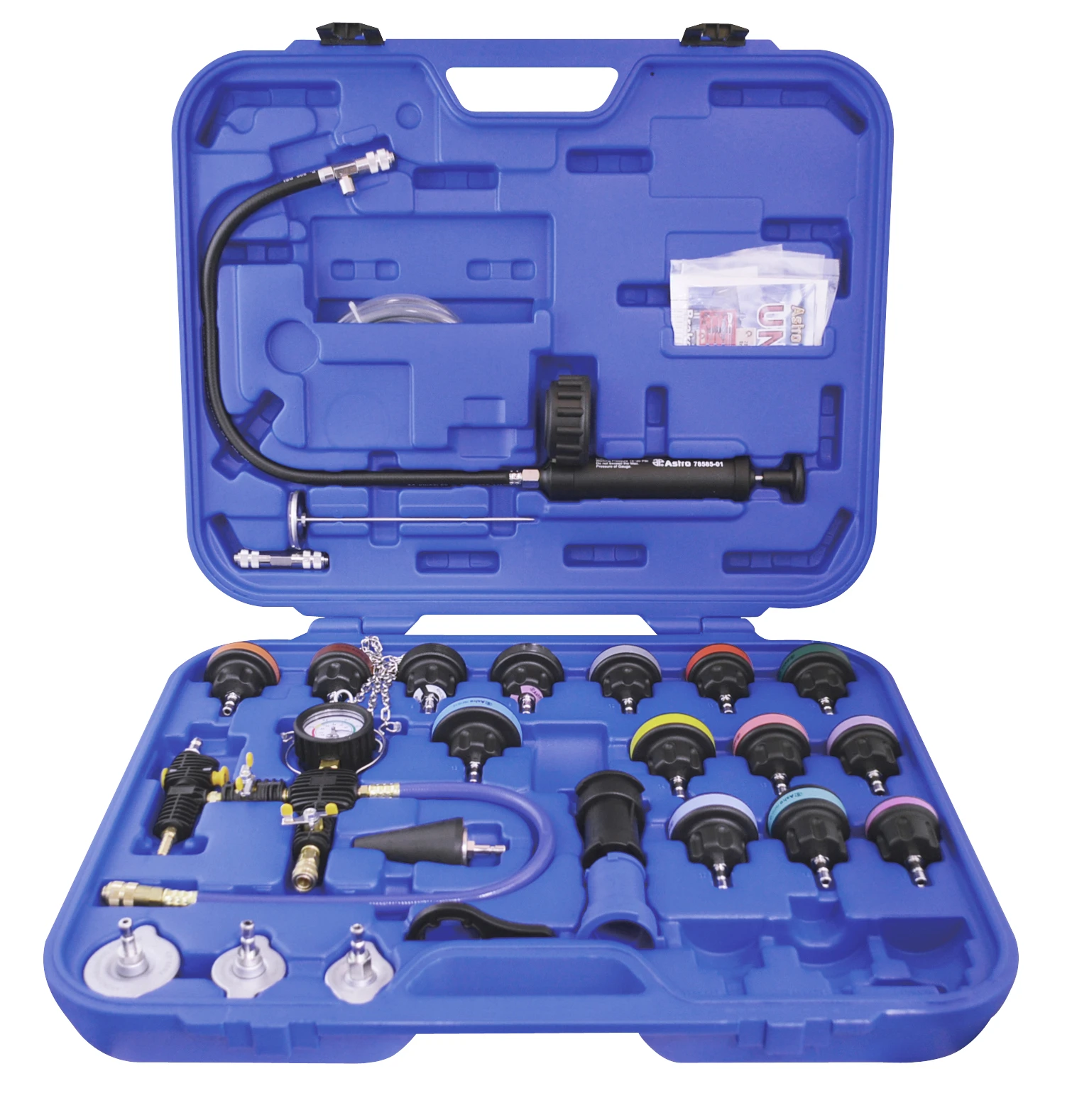
Astro Pneumatic 78585
A broader cooling-service kit for repeat use when pressure testing and vacuum filling both belong in the workflow.
- Best for
- Garages that want a broader adapter set plus pressure testing and vacuum-assisted refill capability.
- Check first
- A large adapter count does not guarantee fit. Confirm the cap interface, pressure limit, and refill procedure for the vehicle.
Compare fit and alternatives in Best Cooling System Pressure Tester.
How to choose
Match the tool to the job first. A cheap tool can be perfect for a simple code check and frustrating for ABS, SRS, TPMS, battery registration, or active tests. A high-end tool can also disappoint if its coverage does not include your exact vehicle.
- Write down the vehicle year, make, model, engine, and system.
- Check whether updates are free, paid, or subscription-based.
- Verify the return policy before testing compatibility.
- Prefer clear limitations over vague feature claims.
How we evaluate the shortlist
We separate manufacturer-documented capability from editorial fit. Compatibility, measurement limits, included hardware, software terms, support clarity, and the safer alternative all matter before hands-on evidence is available.
Read the testing methodRelated guides
Cooling Pressure Tester vs Smoke Machine: Leak Tool Choice
Use a cooling-system pressure tester for coolant leaks and cap pressure checks; use a smoke machine for intake, vacuum, EVAP, exhaust, or boost leaks where safe pressure and adapters fit.
Cooling System Pressure Tester Adapter Guide
Cooling-system pressure testers work only when the cap, neck, or expansion-tank adapter seals correctly and the system is tested at the proper pressure.
Universal Cooling System Pressure Test Kit: Adapter Fit Comes First
A universal cooling-system pressure test kit is only useful when the adapter seals on your radiator or expansion tank. Start with cap fit, pressure range, and safe release before price.
Cooling System Pressure Test Guide
A cooling-system pressure tester helps find coolant leaks, cap failures, and pressure loss while the engine is cool enough to inspect safely.
Diagnostic and Test Tools: Build a Useful Automotive Kit
Build a diagnostic kit around the evidence each tool produces: scanner data, battery condition, electrical measurements, pressure, smoke, compression, temperature, or a saved visual inspection.