The practical difference
Pins measure at the contact path between probes, while pinless meters respond to material conditions within a documented sensing area and depth. Those readings are not interchangeable.
Choose pinless for mapping
Use pinless when the first goal is to compare a broad finished surface, trace a possible leak path, or avoid cosmetic damage. Keep the meter orientation and material mode consistent.
Choose pins for a local check
Use pins when a small mark is acceptable and the exact spot matters. Probe several nearby points because a single contact can land on a dry surface layer, void, fastener, or unusual grain.
A better two-tool workflow
Map first, verify second. A thermal camera can find temperature patterns, a pinless meter can narrow the area, and a pin reading or direct inspection can confirm where further investigation belongs.
Frequently asked questions
Are pin meters more accurate?
Not universally. They measure differently, and both methods depend on material, calibration, contact, depth, and technique.
Will a pinless meter find a pipe leak?
It can reveal a suspicious moisture pattern, but it cannot identify the source or prove that a pipe is leaking.
Do I need both types?
Not always. Both are useful when you routinely inspect finished surfaces and also need localized confirmation.
Best next page
Use the Building Moisture Meters guide when this diagnostic path points to a purchase decision. Compare job fit, limitations, compatibility, and the cost of ownership before choosing a model.
Open Building Moisture Meters guideRelated diagnostic guides
Continue with the closest compatibility, workflow, and buying questions for this tool family.
Tools to compare next
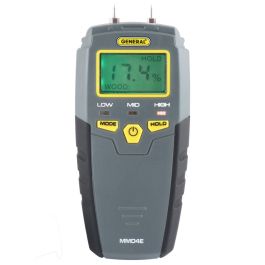
Building Moisture Meters · $
General Tools MMD4E
A straightforward pin-meter option for buyers who want localized readings instead of a non-invasive scan.
- Best for
- Direct spot checks in wood and drywall when small pin marks are acceptable.
- Check first
- Pins sample a small area and can mark the surface. Use the correct material mode and several comparison readings.
Compare fit and alternatives in Best Moisture Meter for Home Diagnosis.
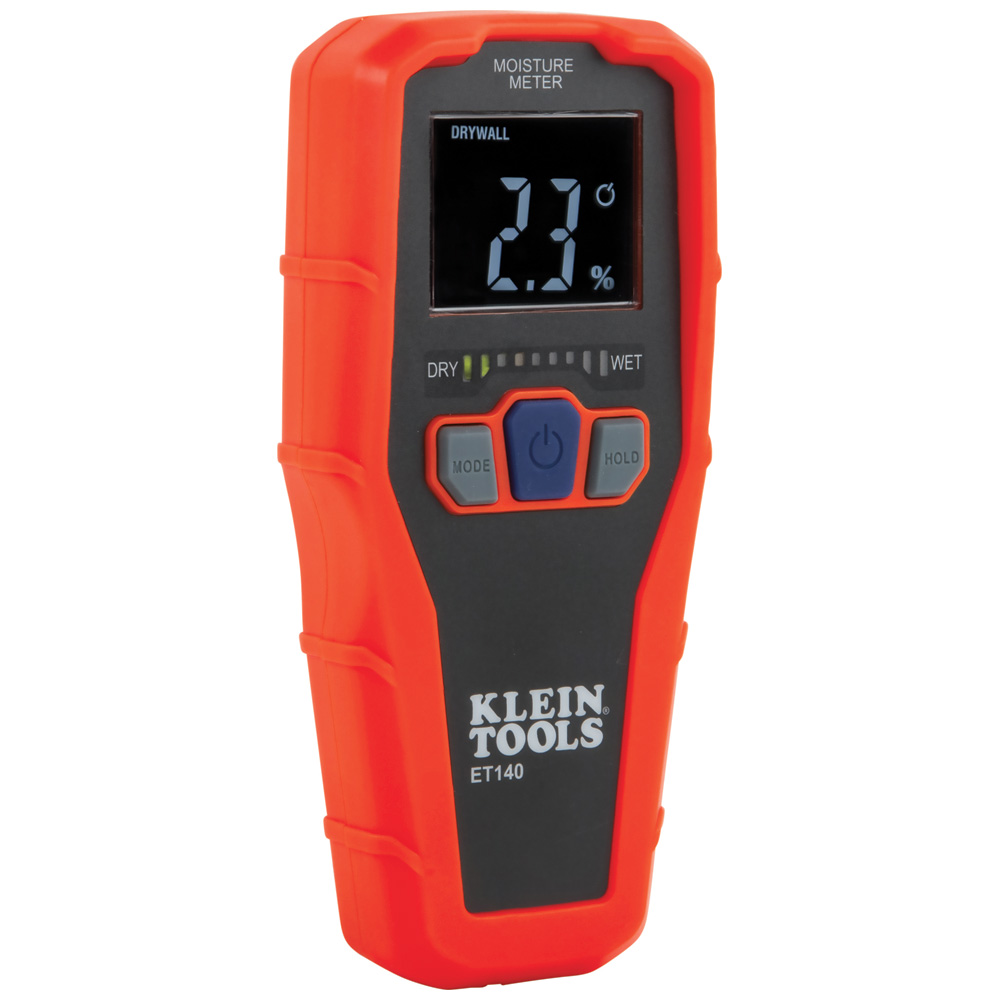
Building Moisture Meters · $$
Klein Tools ET140
A strong first moisture-screening tool when avoiding pin holes matters and suspicious areas can be compared with a dry baseline.
- Best for
- Non-invasive relative moisture comparisons across supported drywall, masonry, hardwood, and softwood materials.
- Check first
- Pinless readings are relative and material-dependent. Metal, depth, surface conditions, and mixed assemblies can distort the result.
Compare fit and alternatives in Best Moisture Meter for Home Diagnosis.

Thermal Imaging Tools · $$
TOPDON TC001
A phone-first thermal camera candidate when portability and app-based image capture are more important than a standalone screen.
- Best for
- Android users who want a phone-connected thermal imager for building, HVAC, electrical, and mechanical pattern checks.
- Check first
- Confirm Android USB-C and app compatibility. Thermal patterns identify where to inspect, not the root cause by themselves.
Compare fit and alternatives in Best Thermal Camera for Home Inspection.
Thermal Imaging Tools · $$$
FLIR ONE Pro for Android USB-C
A premium phone-connected option for buyers who value the FLIR software ecosystem and inspection documentation.
- Best for
- Android users who want a mature phone-based thermal workflow with saved images for inspection documentation.
- Check first
- FLIR sells connector and device variants. Confirm the exact Android USB-C model and current phone compatibility before ordering.
Compare fit and alternatives in Best Thermal Camera for Home Inspection.
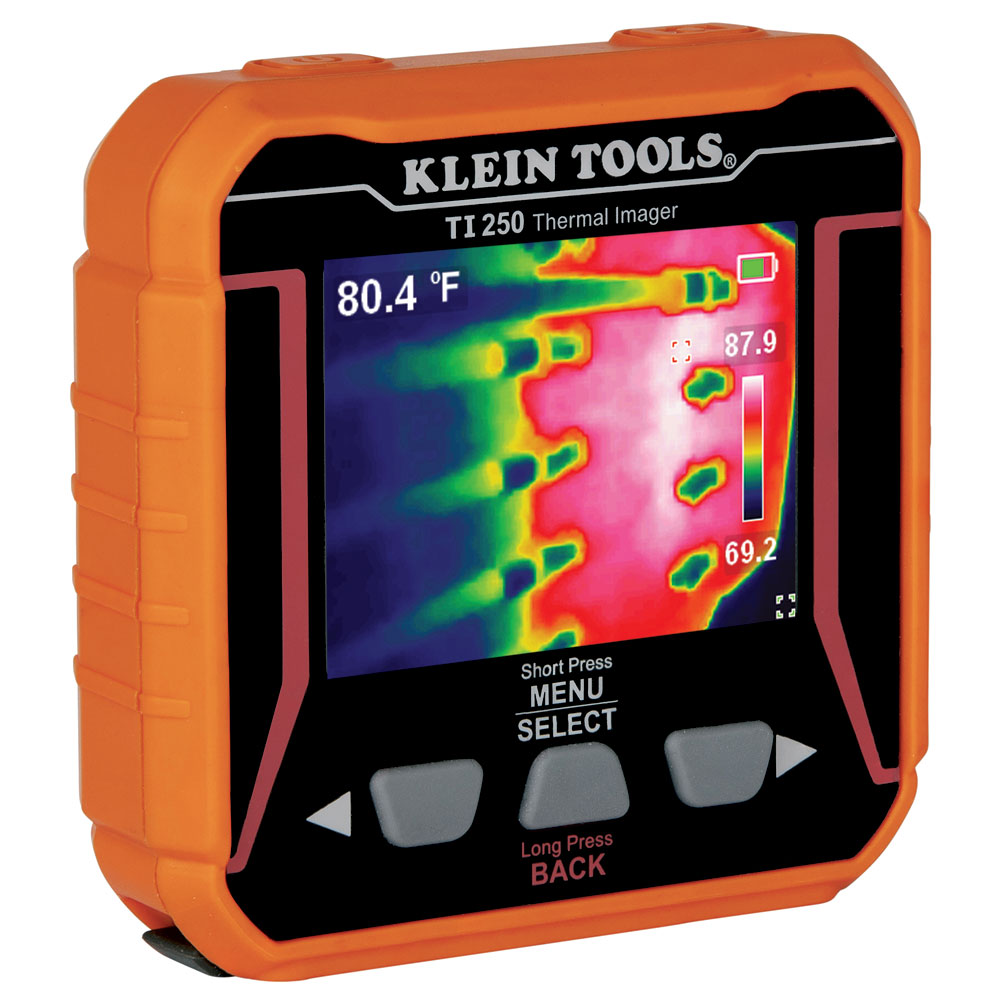
Thermal Imaging Tools · $$$
Klein Tools TI250
A practical standalone thermal-camera path when a dedicated screen and device-independent workflow are priorities.
- Best for
- Buyers who prefer a self-contained thermal camera instead of attaching an imager to a phone.
- Check first
- Confirm the current hardware revision and documented detector specification because product revisions can change while the model name remains similar.
Compare fit and alternatives in Best Thermal Camera for Home Inspection.